T-Account: Definition, Example, Recording, and Benefits
You’d record a $50,000 debit to your technology asset account and a $50,000 credit to accounts payable. When you pay the bill within 60 days, you’d record a $50,000 debit to accounts payable and a $50,000 Law Firm Accounts Receivable Management credit to cash. A trial balance lists all account balances at a specific point to ensure that debits equal credits. T-accounts contribute to the trial balance by providing the raw data for each account’s balance.
Add up all the individual amounts on the smaller side.

The decision to Debit or Credit an account is determined by the account’s classification and its normal balance. For instance, if a business receives $5,000 in cash from a customer, one account must be Debited for $5,000 and a separate account must be Credited for $5,000. The T-account guides accountants on what to enter in a ledger to get an adjusting balance so that revenues equal expenses. The major components of the balance sheet—assets, liabilities, and shareholders’ equity—can be reflected in a T-account. Why is real-time spend visibility important for businesses?
Calculating Account Balances and the Trial Balance
Only with Shopify Payments can you track your orders and payments all in one place. Have a complete view of your finances, accept local currencies and payment types for a smooth checkout experience. A MIS Report (Management Information System) is a set of reports that that provides information to management and other decision-makers in a business….
Why can’t single entry systems use T-accounts?
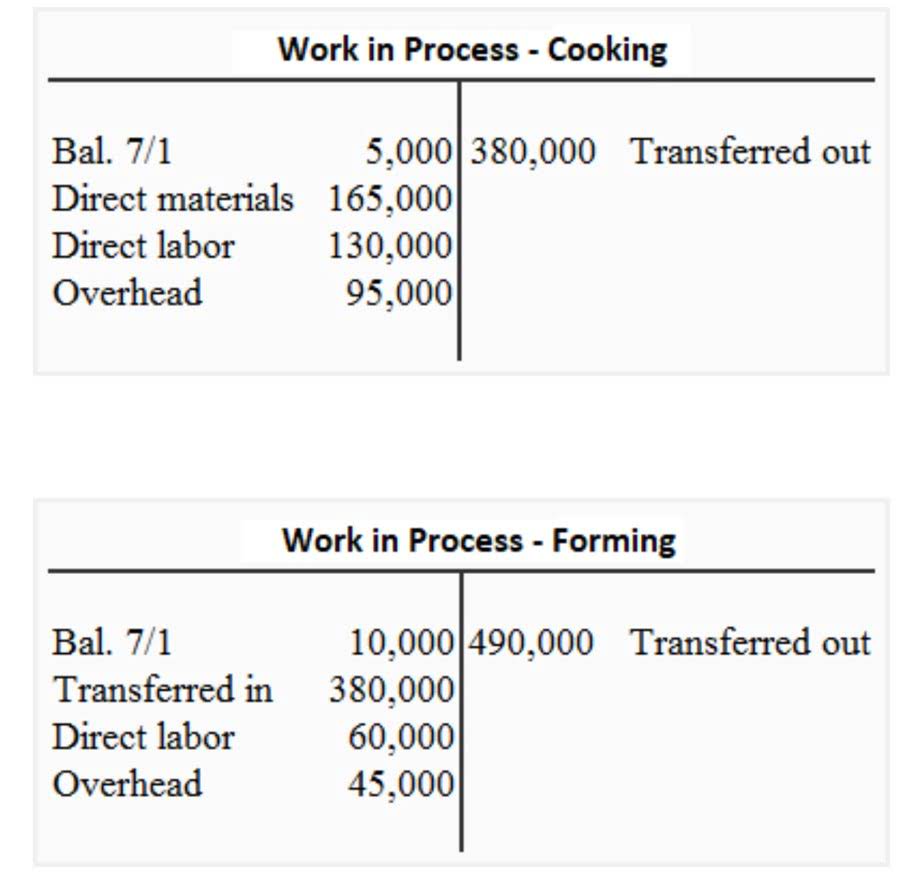
For example, if you debit an account, you must also credit another account to ensure the books are in balance. A T-account is a visual depiction of what a general ledger account looks like. It also makes it quite easy to keep track of all the additions or deductions in an account. The debit side is on the left of the t-account and the credit side is on the right. A bookkeeper can quickly spot an error if there is one and immediately fix it with the help of this visualization. When you’re running your own business, you probably don’t have a ton of spare time to journalize transactions and write down T accounts into the ledger by hand.
- Whether you’re learning accounting or managing your own books, using T accounts can make it easier to understand how money moves through your business.
- They are built from the ground up by these debits and credits.
- Using T accounts, you’ve figured out where everything goes, so you can record this transaction in your accounting software.
- The key financial reports (your cash flow, profit and loss and balance sheet) are an organised representation of these fundamental accounting records.
- The T-account can also be used in determining the proper account balance or to determine the amount to be entered in order to arrive at a desired balance.
- If a company sells shares worth $1000, the T-Accounts will show an increase of $1000 in the assets column and a corresponding decrease of $1000 in the equities column.
- Some accounts have a debit-side balance, while others have a credit-side balance.
- Only with Shopify Payments can you track your orders and payments all in one place.
- In this guide, we’ll discover what T-accounts are, how to record them, their benefits, and drawbacks.
Once all journal entries have been posted to T-accounts, we cancheck to make sure the accounting equation remains balanced. Asummary showing the T-accounts for Printing Plus is presented inFigure 3.10. You can see at the top is the name of the account “Cash,” aswell as the accounting assigned account number “101.” Remember, all assetaccounts will start with the number 1.

Why do accountants use T accounts?
This is the same as the previous transaction, just on the opposite side – we enter the transaction on the credit (right) side of the bank T-account. Label the left side of the T “Debit” and the right side “Credit.” This convention is universal in accounting. Angela Boxwell, MAAT, is an accounting and finance expert with over 30 years of experience. She founded Business Accounting Basics, where she provides free advice and resources to small businesses. We created an Excel template with 10 T accounts on one page.
Remaining Entries: Try this T-Account Exercise
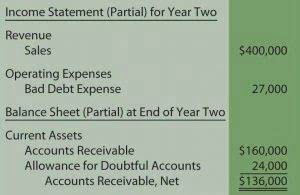
When a business sells to its customers, it receives cash either “now” or “later”. If cash is being received at the time of the sale, the textbook will specify “received cash” to indicate that. If the textbook says “on account” or “billed”, it means that cash will come later. When cash will be received later the account we use to track what the business will be receiving later is Accounts Receivable. If the textbook says “on account”, it means that cash will come later.
T-account vs. ledger
Accountants and bookkeepers often use T-accounts as a t accounts visual aid to see the effect of a transaction or journal entry on the two (or more) accounts involved. To decrease an account you do the opposite of what was done to increase the account. Even small companies can have general ledgers that are more than 1,000 pages when printed out. Obviously, it would be pretty difficult to search through 1,000 pages in order to find information about one account. That is why each account has its own individual ledger account. For example, the fixed assets account would have its own ledger account with only transaction involving fixed assets.
Office Expense Account
T-accounts are flexible and suitable for both small businesses and complex corporate ledgers. Joe Smith, Drawing is a sub-account of the Joe Smith, Capital account. In this case, we want to reduce equity so we debit the account. Always refer to the company’s Chart of Accounts for the official name of the expense accounts.